WHAT WAS CLAIMED
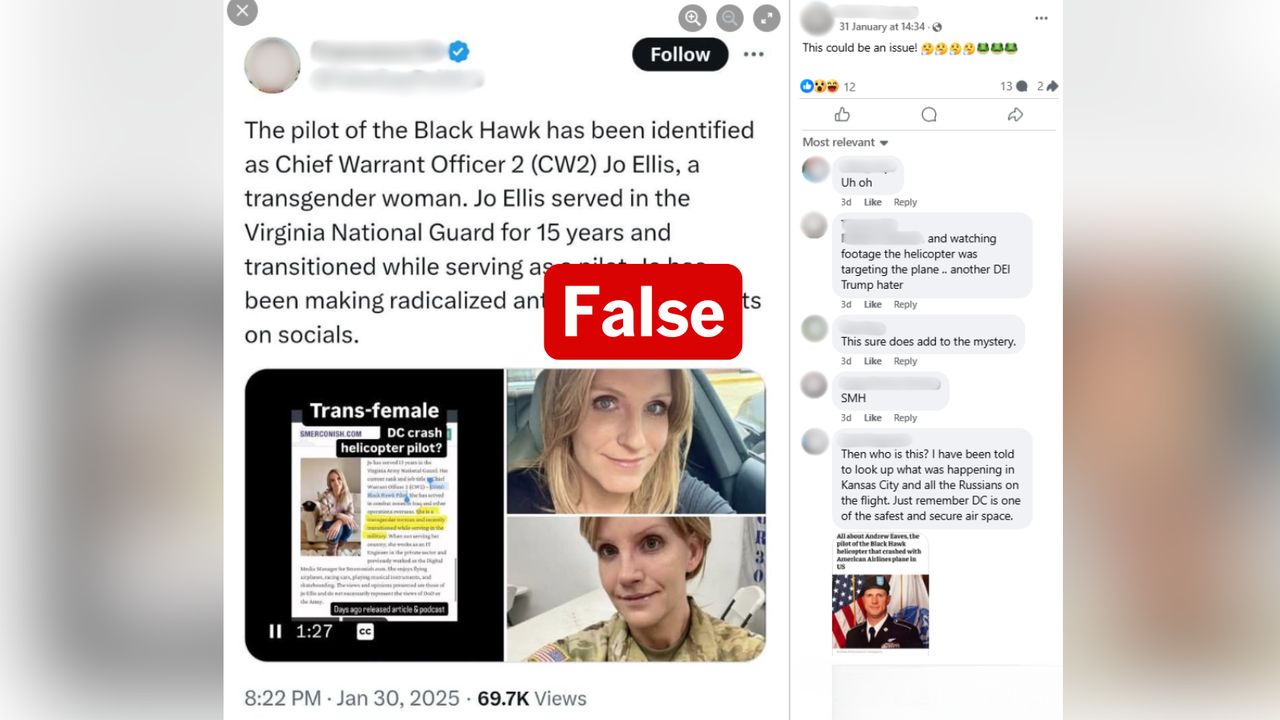
Australia is introducing a social credit score system linked to digital ID for people to access social media.
OUR VERDICT
False. No such policy has been announced.
AAP FACTCHECK - The government is not introducing a China-style social credit system linked to digital ID as a requirement to access social media, despite online claims.
The posts cite a 2021 news report about an abandoned parliamentary committee recommendation to require identity documents for social media accounts.
But experts told AAP FactCheck Australia does not have - and does not have plans for - a social credit score system.
The claim appears in a September 10 Facebook video featuring a news clip from an April 2021 broadcast of Nine's Today show.
The clip discusses a proposal to require people to provide 100 points of identification to create a social media account.
"Australian citizens will require 100 social credit score points from their digital ID to use social media with the police having access to ALL accounts, including private messaging," the Facebook post caption reads.

The claim was also shared on X, where it gained more than 700,000 views.
However, the proposal it references made no mention of "social credit score points" or a "digital ID".
It was one of 88 recommendations made by a parliamentary committee's 2020 inquiry into family, domestic and sexual violence.
The committee published its findings in a 2021 report, and the recommendation cited in the TV clip aimed to address technology-facilitated abuse.
"In order to open or maintain an existing social media account, customers should be required by law to identify themselves to a platform using 100 points of identification, in the same way as a person must provide identification for a mobile phone account, or to buy a mobile SIM card," recommendation 30 of the report said (page xxxi).
A 100-point identity check requires two or more primary documents, such as a passport, birth certificate or driver licence or three or four secondary documents, such as a Centrelink or Medicare card or a combination of the above.

The 2021 report was later used to develop the National Plan to End Violence against Women and Children 2022-32, but the plan did not include recommendation 30.
The government's official response to the 2021 report was released in March 2023 and said recommendation 30 was "noted", rather than supported (page 50).
"The Government notes this recommendation, acknowledging the sensitivity and complexity of many of the issues raised," the report said.
Sophie Farthing, a public policy expert from the University of Technology Sydney's Human Technology Institute, confirmed the ID check recommendation was never implemented.
"At the moment, there's certainly nothing along the lines of what this recommendation from 2021 was recommending, which was the 100 points of ID," Ms Farthing told AAP FactCheck.

The Facebook post appears to reference social credit systems used in parts of China.
Some of these Chinese systems involve rating people using a points-based system, with individuals rewarded or penalised based on their behaviour, according to a 2024 study.
However, Ms Farthing said she was not aware of any plans for a social credit system in Australia.
Tom Sulston, deputy chair of not-for-profit Digital Rights Watch, said that even where age verification was required under social media minimum age laws, platforms were required to offer users multiple ways to verify their age.
"If a social media platform uses government ID, like a driver's licence, to do this, they must also offer at least one other method of age verification, like photographic age estimation, as an alternative," Mr Sulston told AAP FactCheck.

Section 63DB of the Online Safety Act 2021 prevents social media platforms from requiring people to use a digital ID service for age verification.
The post also claims that police will have access to all social media accounts, including private messages.
Recommendation 30 of the 2021 parliamentary committee report proposed allowing law enforcement agencies to "access a platform's end-to-end encrypted data, by warrant", in cases involving threats to a person's wellbeing or national security (page xxxii).
However, experts previously told AAP Factcheck that even if the recommendation became law, police would need to meet a high threshold to access private messages.

Mr Sulston said existing laws already provided police some access to accounts and private messages.
"There is legislation in Australia - the Assistance and Access Act - where the minister for home affairs can compel a tech company to provide access to data or systems for police or intelligence use," he said.
Similar claims have circulated previously. However, they appear to have resurfaced after the government released its draft Online Safety Amendment (Digital Duty of Care) Bill in early September 2026.
The bill includes various measures intended to improve online safety and regulate the use of algorithms.
However, Ms Farthing said nothing in the bill would require a social credit score system or force users to provide personal information to set up a social media account.
Jeannie Paterson, a professor of consumer protection and technology law at the University of Melbourne, described the claims in the Facebook as "nonsense".
AAP FactCheck is an accredited member of the International Fact-Checking Network. To keep up with our latest fact checks, follow us on Facebook, Instagram, Threads, X, BlueSky, TikTok and YouTube.