WHAT WAS CLAIMED
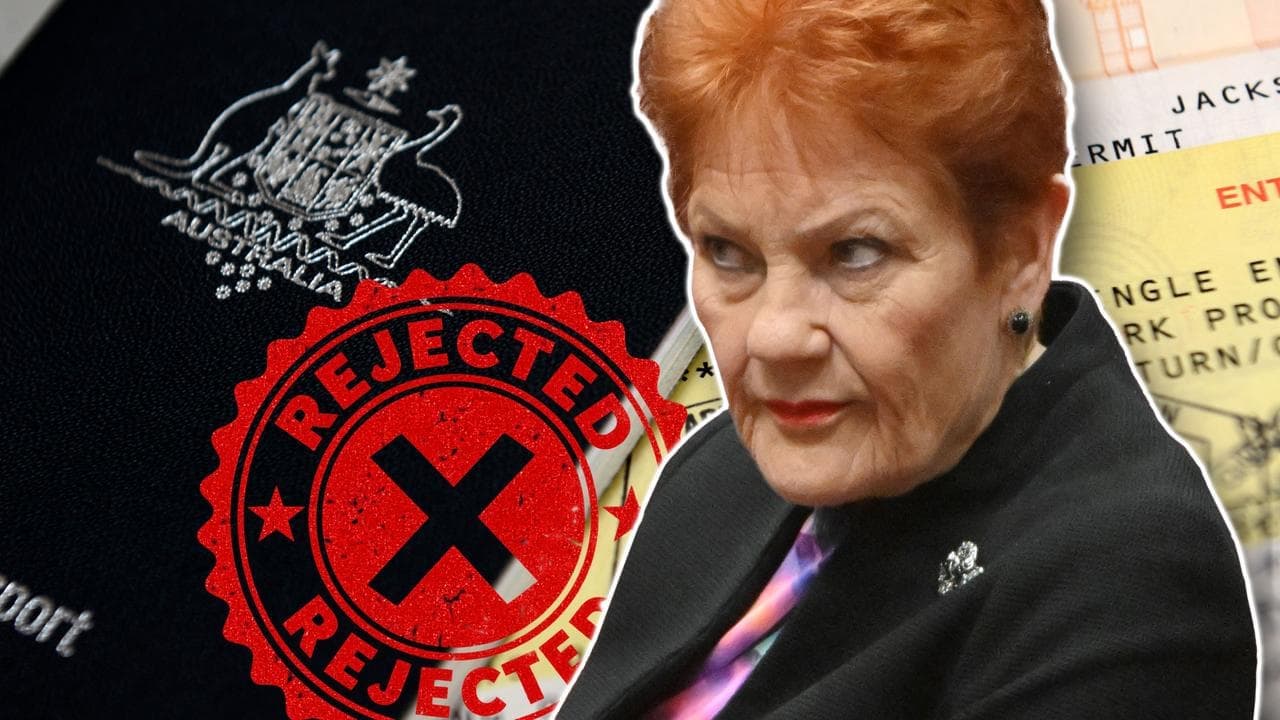
The coalition went to the 2025 election promising higher debt and deficits.
OUR VERDICT
Mixture. While costings suggest higher debt and deficits by the mid 2030s, coalition policies were forecast to reduce both significantly over the shorter term.
AAP FACTCHECK - The Albanese government is arguing the coalition can't be trusted to manage the economy because they promised higher debt and deficits during last year's election campaign.
But while that claim is partly accurate, an independent analysis found the coalition's policies actually reduced deficits by $6.6 billion out to 2028/29.
Estimates of net debt were also significantly lower between 2025/26 and 2032/33.
Treasurer Jim Chalmers has used the claim to attack Opposition Leader Angus Taylor, who was shadow treasurer when the coalition lost the election.
"Angus Taylor is the architect of the Liberal Party's policy for higher taxes on workers, bigger deficits and more debt," Dr Chalmers told Channel Nine's Today program.
Environment minister Murray Watt made a similar criticism in February.
"He was Peter Dutton's shadow treasurer who went to the election wanting for Australians higher taxes, higher debt, higher deficits," Mr Watt said.
Prime Minister Anthony Albanese has likewise claimed Mr Taylor went to the election arguing for bigger deficits.
When asked for evidence for the claim, Dr Chalmers' office referred AAP FactCheck to the Parliamentary Budget Office's (PBO) Election Commitments Report, which independently assesses the fiscal impact of each party's campaign policies.
His office also referred to the coalition's own costings of their election commitments.
Both reports compare the estimated impact of the coalition's promises against the pre-election fiscal outlook (PEFO).
The PEFO is a snapshot of government finances before a federal election.
As the below graph shows, the PBO found that coalition policies increased annual deficits initially, before reducing deficits and then increasing them again from 2031/32.
The underlying cash balance (UCB) in the above graph is one key measure that shows whether the government has to borrow money to cover its expenses.
When the UCB is negative, the budget is in deficit, and so negative figures in the above graph show financial years where the coalition's policies made deficits higher.
Deficits were slated to be higher than the baseline in 2025/26 and 2026/27 (p48).
However, improvements over the following two financial years meant coalition policies were forecast to reduce combined deficits by $6.6 billion across the four years to 2028/29 - a period known in government finances as the forward estimates.
Additionally, the coalition's promises were also forecast to lower debt over this time.
Net debt is commonly used to measure the government's financial position - it tracks the value of debt that the government owes, minus the value of financial assets such as money owed to the government. A related measure called gross debt tracks the total amount of government debt outstanding without subtracting the value of those financial assets.
Net debt was projected to be $49.9 billion lower cumulatively between 2025/26 and 2028/29 under the coalition's policies (p48).
Gross debt was forecast to be $81.7 billion cumulatively lower over the four-year period.
The PBO also analysed the impact of the coalition's promises beyond the forward estimates into a period called the "medium term projections" that run to 2035/36.
Over this time, it was estimated that deficits would be lower from 2028/29 to 2031/32 under the coalition, while net debt was also lower out to 2033/34.
However, after that, the coalition's promises would worsen deficits and debt through to the end of the decade-long projections in 2035/36, according to the PBO analysis.
Deficits would be $162.4 billion cumulatively larger between 2031/32 and 2035/36, while net debt would be $275.6 billion cumulatively higher between 2033/34 and 2035/36, the PBO said (p47-48).
The PBO forecasted a similar trajectory for gross debt, with reductions in each financial year up until 2033/34. Over the final three years of projections, however, net debt was projected to rise cumulatively by $230.3 billion.
The PBO said that comparing deficit and debt in dollar terms over time is complicated by factors such as economic growth, population increases, and inflation (p69).
It explained that one way to account for these factors is to express debt and deficits as a proportion of GDP.
Deficits (UCB) were 1.33 per cent higher as a proportion of GDP under the coalition by 2035/36, the PBO found, while net debt was 3.5 per cent higher as a proportion of GDP.
The PBO said the primary drivers of the worsening budget position through to 2035/36 were the coalition's plan to raise defence spending to 3 per cent of GDP and to cap tax revenue to 23.9 per cent of GDP.
Effectively, the tax cap would limit tax revenue over the next decade, which is expected to otherwise increase as workers enter higher tax brackets due to wage growth - a phenomenon known as bracket creep.
To enforce this tax pledge, the PBO assumes the coalition would implement tax cuts from 2030/31 worth 1 per cent of GDP (or around $141.3 billion) by 2035/36.

These tax cuts are assumed to occur without any other changes in policy that would impact government spending.
Stephen Bartos, an economics professor at the University of Canberra, said that the government's claims about debt and deficit aren't incorrect, but haven't presented the full story either.
"It is reasonable to claim, based on the PBO costings, that the coalition platform would have led to a lower deficit in the short term, but over the medium term, a higher deficit," Professor Bartos told AAP FactCheck.
David Bond, an accounting expert at UNSW Business School, said the PBO estimates for 2025/26 and 2026/27 support the government's claim.
But 2027/28 and 2028/29 showed a far larger reduction in debt and deficits, he said.
"Given that the overall impact over the forward estimates was a decrease in gross debt, I don't think it is reasonable to use that to say their platform promised higher debt," Dr Bond told AAP FactCheck.
At the same time, Dr Bond pointed out that the medium-term projections indicate that coalition policies would have resulted in higher debt to 2035/36.
"The overall impact in the medium term (from the PBO report) is to increase the debt levels," Dr Bond said.
"If the government are claiming that, that would seem reasonable."
The experts pointed out that these longer-term costings are mired in significant uncertainty and are less reliable than the forward estimates.
Prof Bartos said both the forward estimates and medium-term projections are typically subject to change, but that the further out the forecasts go the "greater the error margin" becomes.
"A forward estimate is a more reliable guide to budget outcomes the closer it is to the budget year," he said.
"An estimate 10 years on (for 2035-36) for either revenue or expenses is almost certain to diverge very significantly from actual revenue or spending in that year."

Dr Bond agreed that projections past the forward estimates "aren't all that reliable".
"The projections are based on expectations relating to government policy. If that changes, the forecasts then become out of date," he said.
In reference to the medium-term projections, Prof Bartos said: "Governments will almost certainly make policy changes [and] we know the economy will probably move in a different direction from that forecast.
"The good thing is the reasons for those changes can be observed. While the assumption of 'no policy change' is artificial, constructing estimates with this assumption allows us to measure what happens if a policy changes."
The Treasurer's office also noted that the policy costings don't fully capture the potential costs of the coalition's election policy to build seven taxpayer-owned nuclear power stations.
As AAP FactCheck has previously explored, claims about the price of the policy varied significantly and were uncertain.
AAP FactCheck is an accredited member of the International Fact-Checking Network. To keep up with our latest fact checks, follow us on Facebook, Instagram, Threads, X, BlueSky, TikTok and YouTube.