WHAT WAS CLAIMED
Petrol prices have risen 39 per cent in Australia, but only 16.6 per cent in the US and 10.6 per cent in Canada since the start of the war.
OUR VERDICT
False. The graphic significantly overstates the difference in petrol price increases between Australia, the US and Canada.
AAP FACTCHECK - Petrol prices in Australia have not risen four times as much as in Canada and more than twice as much as in the US since the start of the Iran war, despite claims on social media.
Average Australian petrol prices rose 40 per cent between March 1 and March 29, according to weekly data published by the Australian Institute of Petroleum (AIP).
Meanwhile, bowser prices rose 31 per cent in the US and 29 per cent in Canada in March, data shows, meaning the gap to Australia was between 9 and 11 percentage points.
A graphic claiming the gap was up to four times that amount has been posted by multiple users on Facebook and Instagram in recent weeks.
It appears to have first been posted on March 22, when Australia's average petrol prices were about 31.5 per cent higher than pre-war levels.
Despite that, the graphic claimed Australian petrol prices had risen 39 per cent.
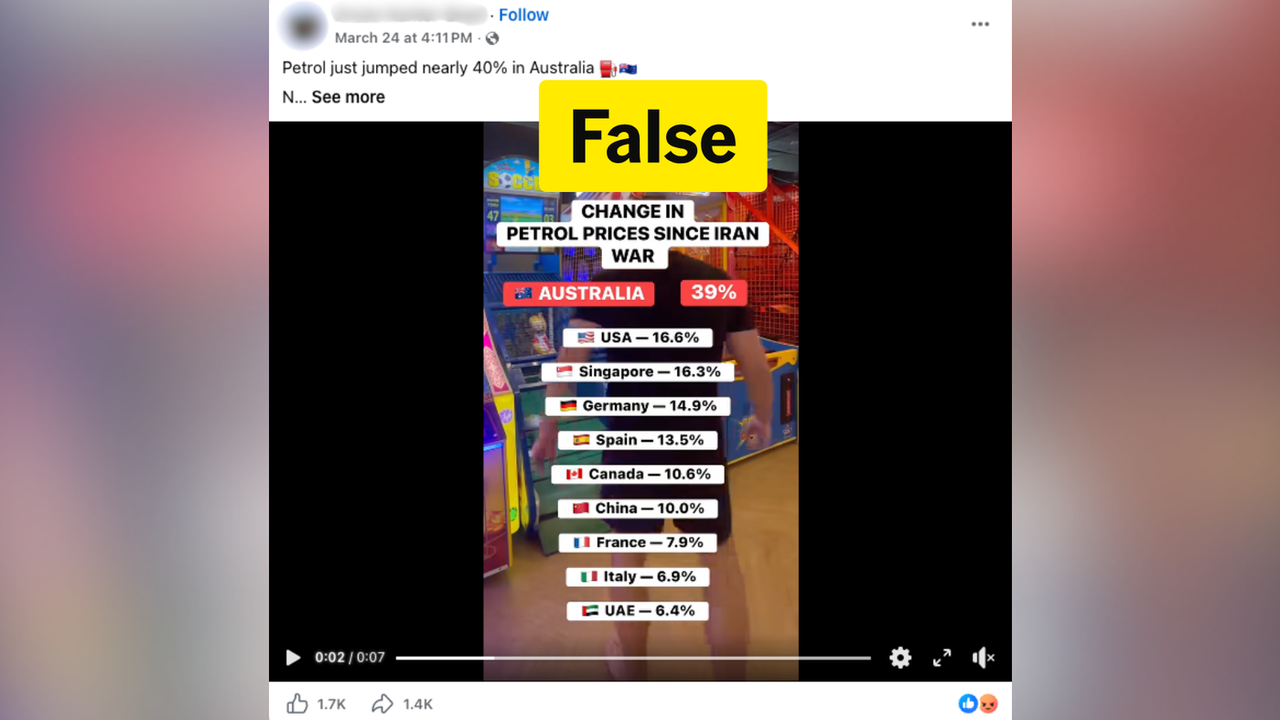
It also includes figures for petrol price increases in nine other countries: the US, Canada, Germany, France, Spain, Italy, China, Singapore and the United Arab Emirates.
Canadian and US prices were up 10.6 per cent and 16.6 per cent respectively, it claims.
But by March 23, average petrol prices had actually risen by about 30.1 per cent in the US compared to March 2, according to weekly data published by the US Energy Information Administration.
By April 6, the US prices were 35.1 per cent above the average on March 2.
In Canada, average petrol prices rose 28.9 per cent between February 27 and March 23, according to data compiled by the government's natural resources agency.
Prices have continued to rise since and were 34.7 per cent higher than before the war on April 7.

These figures show that the petrol price increase in Australia was not four times higher than in Canada, nor more than twice as high as in the US - either at the time the graphic was posted or since.
The graphic also presented inaccurate figures for petrol price increases in European countries, however the quantum of the difference in price hikes wasn't as substantial.
Weekly data from the European Commission lists price rises for 'Euro 95' unleaded petrol between March 2 and March 23. These were only a few percentage points different to those shown in the graphic.
Germany's actual price rise was 2.1 percentage points lower than what's quoted in the graphic; Spain's was 3.1 percentage points higher; France's was 4.3 percentage points lower; and Italy's was 0.4 percentage points lower.
Using data dated to April 6 (the latest available), Germany's price was 3.8 percentage points higher than shown in the graphic, France's was 7.6 percentage points higher; Spain's was 9 percentage points lower; and Italy's was 1.4 percentage points lower.

The graphic also lists petrol price rises for China (10 per cent), Singapore (16.3 per cent) and the UAE (6.4 per cent).
In the UAE, petrol prices are regulated and are announced on a monthly basis. The difference in prices announced from March 1 and those from April 1 is 30.8 per cent.
Petrol prices in Singapore rose 20.5 per cent before discounts between February 23 and March 23, according to weekly data published by vehicle services platform Motorist.sg.
By April 8, petrol prices remained 20.5 per cent above pre-war levels.
AAP FactCheck was unable to find reliable national average petrol prices for China.
AAP FactCheck is an accredited member of the International Fact-Checking Network. To keep up with our latest fact checks, follow us on Facebook, Instagram, Threads, X, BlueSky, TikTok and YouTube.