WHAT WAS CLAIMED
The Philippines has passed a law to execute corrupt politicians by firing squad.
OUR VERDICT
False. The Philippines abolished the death penalty in 2006 and bills proposing to reinstate it for political corruption have not been passed into law.
AAP FACTCHECK - The Philippines has not passed a law to execute corrupt politicians by firing squad, despite claims circulating on social media.
The country abolished the death penalty in 2006 and it has not been reinstated.
A bill proposing the reimposition of the death penalty for corruption-related crimes was filed in the Philippines' House of Representatives, but it has not passed into law.
The claim has spread widely on social media, including in a post shared in an Australian Facebook group.
The post includes an image of a woman holding a rifle at a shooting range with overlaid text stating: "The PHILIPPINES has just passed a law to EXECUTE CORRUPT POLITICIANS BY FIRING SQUAD for STEALING PUBLIC FUNDS!"
"Would you SUPPORT THIS in AMERICA & AUSTRALIA?!"

However, this is false. Imelda Deinla, an expert in Philippine law at Australia's University of New England, said no such law has been enacted.
The Philippines abolished the death penalty in 2006 under Republic Act No. 9346, which remains in force.
"This law explicitly prohibited the imposition of the death penalty in the Philippines and commuted all existing death sentences to reclusion perpetua (life imprisonment)," Dr Deinla told AAP FactCheck.
There are no exceptions to this law permitting capital punishment, she said.
Article III, section 19 of the 1987 Philippine Constitution also prohibits the imposition of the death penalty, but includes a provision that could allow the country's congress (parliament) to reintroduce the penalty for reasons "involving heinous crimes".
Dr Deinla said this provision had formed the basis of several legislative attempts to reinstate the death penalty in the Philippines.
However, a search of Philippine congressional records and news reports shows none of these proposals became law.

Theodore Te, a human rights lawyer at the University of the Philippines, also said no new death penalty law has been passed.
"The post on the FB [Facebook] page is inaccurate and has no basis in fact," he told AAP FactCheck.
The most recent bill that appears related to the claim is House Bill No. 11211, introduced on December 16, 2024.
The bill proposed imposing the death penalty by firing squad for government officials convicted of corruption.
The bill's explanatory note stated it would apply to public officials at all levels who are convicted of offences including "graft and corruption, malversation of public funds and plunder".
However, this bill was not passed into law and appears to have lapsed.
The Congress of the Philippines website shows it was referred to the House Committee on Justice during the 19th congress, which ended in June 2025, and is still "pending" with the committee.

However, the bill does not appear on the committee's list of bill referrals for the 20th congress, which began in July 2025.
For a bill to become law in the Philippines, it must pass both chambers of congress, including the House of Representatives and the Senate.
It is then presented to the president for approval, according to article VI, section 27 of the constitution.
Dr Deinla confirmed there is no public record of the bill being enacted.
"The social media claim therefore conflates the filing of a legislative proposal with the passage of a law, a fundamental and misleading misrepresentation."
David Lozada, an Asian studies lecturer at the University of Melbourne, also said House Bill No. 11211 has not become law.
"I have not seen it proceed through the legislative processes," Dr Lozada told AAP FactCheck.
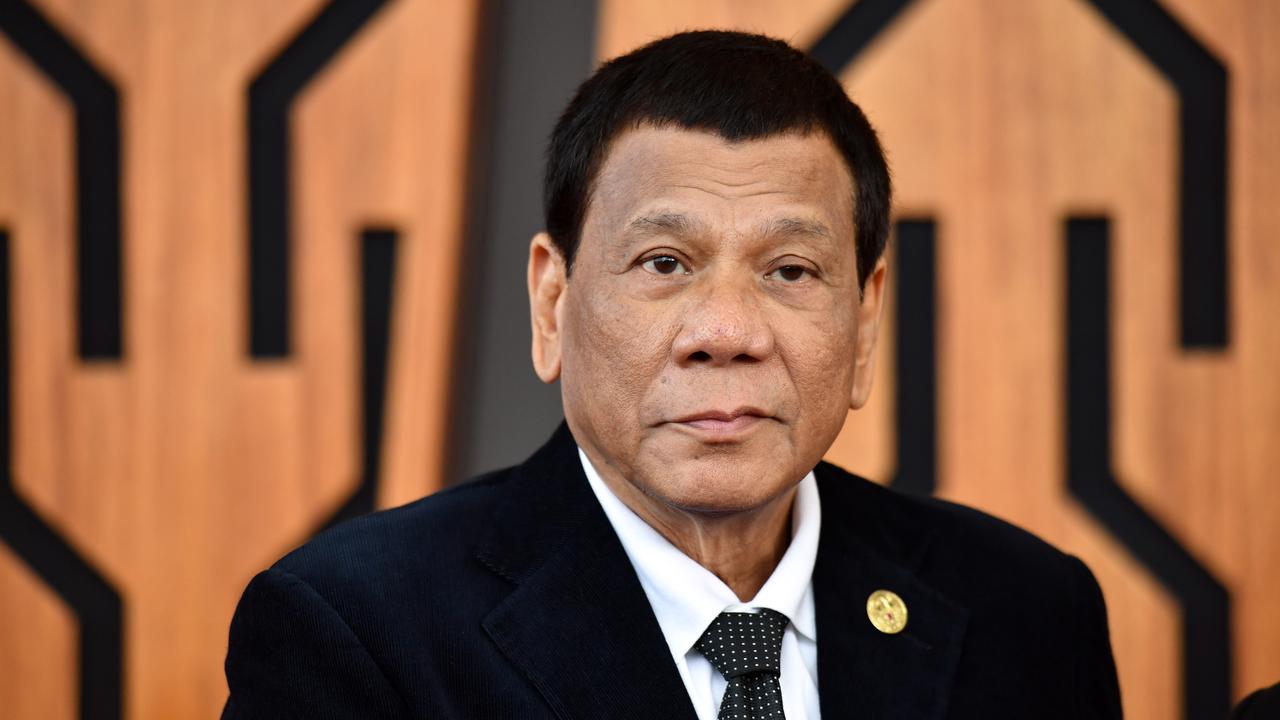
However, extrajudicial killings have allegedly occurred in the Philippines.
Dr Deinla said during Rodrigo Duterte's administration between 2016 and 2022, thousands of people were killed extrajudicially as part of a crackdown on drugs.
Mr Duterte was arrested in 2025 after the International Criminal Court issued an arrest warrant, alleging he was responsible for crimes against humanity.
The ICC found reasonable grounds that Mr Duterte was responsible for thousands of deaths as head of a vigilante group called the Davao Death Squad.
His trial is set to begin on November 30, 2026.
Human rights groups claim extrajudicial killings have also continued under the current president, Ferdinand "Bongbong" Romualdez Marcos Jr.
AAP FactCheck is an accredited member of the International Fact-Checking Network. To keep up with our latest fact checks, follow us on Facebook, Instagram, Threads, X, BlueSky, TikTok and YouTube.